

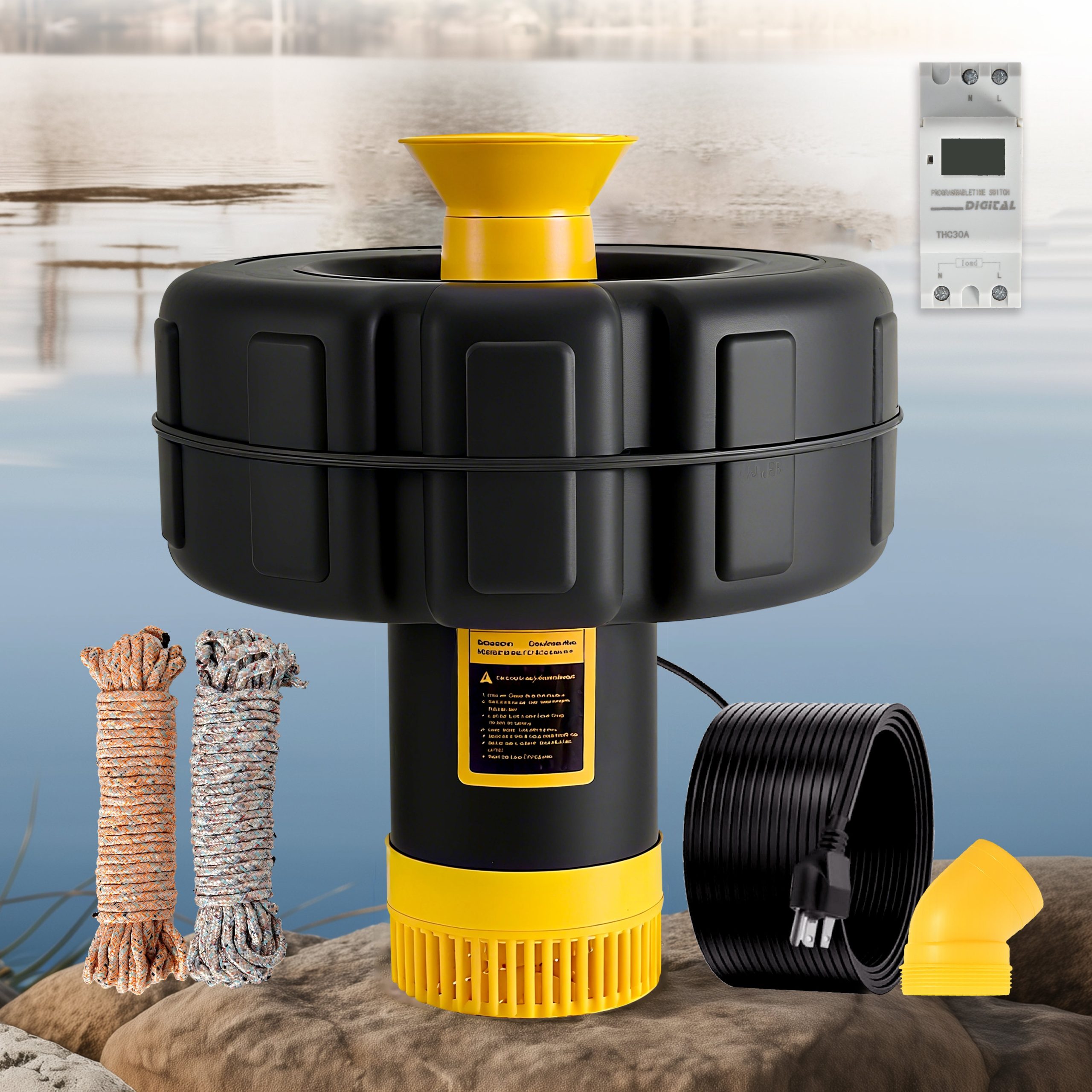
Quick framing — why compare aerators at all?
Large ponds are tricky: they need steady oxygen, reliable mixing, and gear that won’t annoy neighbors. That’s where a focused comparison helps — not just specs, but real trade-offs. If you’ve shopped pond gear online, you’ve seen flashy pond fountain photos and vague performance claims. Orison’s take leans engineering-first, which matters when you’re choosing between surface fountains, floating fountains for ponds, and submerged aeration rigs.
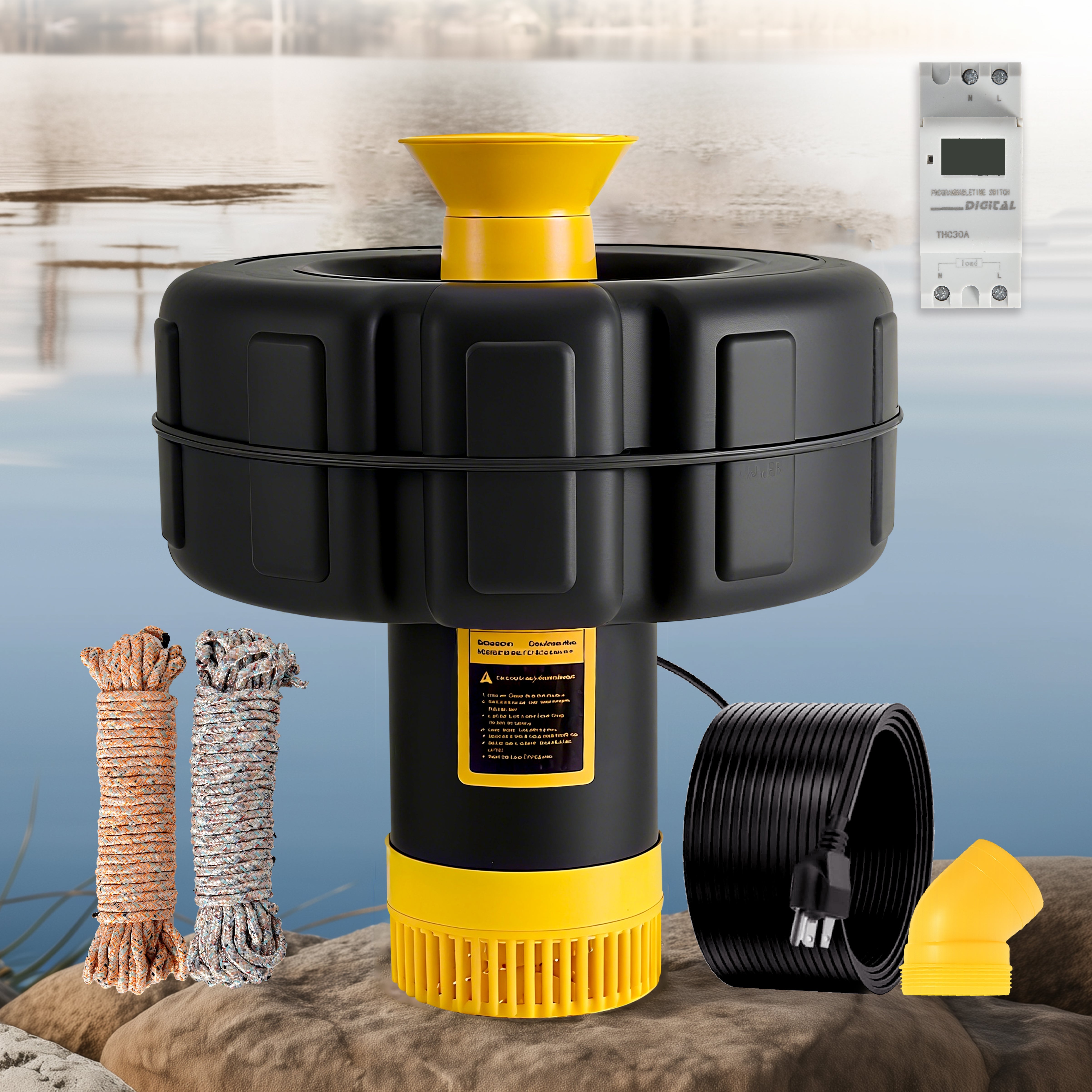
What Orison engineers differently
They focus on three things: low noise, consistent oxygen transfer, and rugged, serviceable design. That means careful impeller selection, tuned flow rate, and attention to motor mounting to cut vibration. The result: lower decibels and steadier OTR across seasons. In practice, that solves the two most common headaches: oxygen dips at night and neighbors complaining — both matter in suburban or park settings.
Real-world anchor: why this matters (Lake Erie and beyond)
Think of recurring algal blooms in places like Lake Erie — they’re a reminder that oxygen and mixing shape ecosystem health. For pond owners managing nutrient loads and summer stratification, the right aeration strategy reduces risk of fish kills and algae hotspots. Orison’s systems aim to lower thermal layering and boost dissolved oxygen where it counts — at depth and across the basin.
Side‑by‑side: Orison vs common alternatives
Surface fountains look great and provide surface exchange, but they often leave deeper zones stagnant. Diffused aeration reaches depth but can be noisy or maintenance-heavy. Orison’s floating aerators try to bridge that gap: they pair surface mixing with directed flow so deeper water gets oxygenated without a big sound penalty. Compared to cheap pond pumps, Orison’s units use engineered nozzles and isolation mounts to cut vibration — meaning less noise and more stable aeration curves.
When Orison is the right call — and when it’s not
Pick Orison if you need low‑noise, high‑efficiency aeration for a pond used for recreation, aquaculture, or a community park. Their design favors long runtime and easy service. But if your priority is just visual spectacle — a towering nighttime spray — a decorative fountain or large surface fountain might be better. Also, for huge commercial lagoons where cost per cubic meter dominates, heavy-duty industrial blowers and diffused aeration arrays could be more cost‑effective.
Common mistakes owners make — and quick fixes
Owners often under‑size equipment, assume noise won’t matter, or skip periodic checks. Don’t: undersized units can’t overcome thermal stratification; noise will become a complaint; hoses and seals fail if ignored. A simple fix is to match aerator capacity to pond volume and desired turnover, and to schedule quarterly inspections — bearings, seals, and impeller wear are cheap to catch early. —
Practical comparisons to ask for when evaluating vendors
Ask for these three datapoints from any supplier: measured OTR at specified depths, sound level in decibels at 3–5 meters, and documented service intervals. Those numbers separate marketing fluff from engineering reality. Vendors that supply field-test logs and clear specs let you compare apples to apples.
Three golden rules for picking an aeration solution
1) Match capacity to hydrology: model your pond’s volume and stratification, then choose a unit with proven oxygen transfer for that profile. 2) Prioritize low vibration and serviceability: look for vibration isolation, modular impellers, and easy seal replacement to cut lifecycle costs. 3) Verify field performance: insist on short-term site trials or validated case studies showing OTR and noise figures under real conditions.
Wrap-up: engineering-first choices give you quieter operation, more reliable oxygenation, and fewer surprise repairs. If you want a practical, low-noise solution that balances surface mixing with depth oxygenation, Orison often fits the brief — smart design, clear specs, and easier upkeep. —