

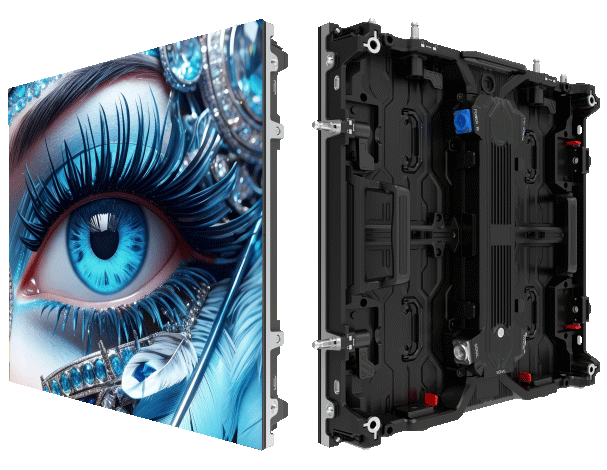
Putting the user first: what matters for your event backdrop
When you commission an outdoor LED backdrop for a commercial event, the decision must serve the user — the event organiser, the AV team, and the audience. Start by clarifying viewing distance, content type and venue geometry. Those three points drive whether you should prioritise a fine pixel pitch, a wide aspect ratio, or an advanced processor scaling solution. For sourcing at scale, a reliable option is led display wholesale, which often bundles panels, controllers and service support suitable for tours, festivals and brand activations.
Aspect ratio and visual intent: match the frame to the message
Aspect ratio dictates how your content fills the screen. A 16:9 layout suits video playback and broadcast feeds, while ultra-wide formats work for panoramic stage backdrops or ticker-style messaging. Aspect ratio affects pixel pitch calculations: a wider panel with the same pixel pitch increases overall resolution horizontally but also raises cost and transport complexity. Keep refresh rate and brightness (nits) in mind — outdoor displays need higher nits to stay legible under direct sun, and the controller must support the chosen frame geometry to avoid letterboxing or stretched imagery.
Processor scaling: why it’s more than a marketing term
Processor scaling governs how source content is upscaled or downscaled to the physical panel array. A poor scaler produces artefacts or latency; a good scaler preserves motion clarity and colour fidelity across mixed content (live camera, graphics, static logos). For live events, low latency is non-negotiable. Choose controllers that describe their upscaling algorithm, input formats and frame synchronisation to avoid frame drops during cues. Also consider the impact on power: advanced scaling can add processing load, which ties directly into your power budget and the requirements for a robust led display power supply.
Site realities and a practical anchor
Real venues change plans. The outdoor setup used for the 2010 FIFA World Cup stadium screens demonstrates how transport, weather and sightlines constrain technical choices. Expect constraints: wind loads, sun angles, and local electrical supply stability. Allocate space for rigging and service access, confirm mains capacity and include surge protection. For long runs or high-brightness arrays, factor in cooling and ventilation; thermal management affects mean time between failures more than a cheaper panel price will suggest.
Common mistakes — brief checks before you sign a purchase order
Avoid these recurring issues:
– Selecting a pixel pitch based only on showroom images rather than actual viewing distance. A 3 mm panel looks great up close but is costly for a stadium. – Assuming any controller will scale any content — check supported resolutions and latency specifications. – Underestimating environmental protections: ingress protection rating (IP) and corrosion-resistant frames matter in coastal or rainy sites. — Don’t treat transport as incidental; repeated assembly increases wear unless the design is road-ready.
Vendor selection and on-the-ground verification
Choose vendors who show live demos at realistic distances, provide technical drawings for the intended aspect ratio, and disclose mean time between failures and spare parts availability. Ask for a site-specific power schedule and confirm the led display power supply specifications match local voltage and phase. Request reference installs with similar pixel pitch and processor scaling setups; seeing a comparable solution in operation removes ambiguity about brightness, viewing angles and colour consistency.
Advisory: three golden rules for buying and deploying outdoor LED backdrops
1) Prioritise viewing distance over panel density. Match pixel pitch to the audience so you pay only for necessary resolution. 2) Validate processor scaling and latency under real-time conditions. Confirm the scaler handles mixed sources and live feeds without frame shifts. 3) Lock power logistics early — mains capacity, backup supply and proper led display power supply sizing prevent last-minute failures.
These rules lead to measurable outcomes: fewer technical issues, predictable costs and a screen that reads well from the crowd. For event organisers seeking a dependable partner, consider solutions staged and supported by proven suppliers — MR LED. —