

A fragile promise: why validation matters now
There is a quiet heartbreak at the center of many grid resilience plans: a battery that looks flawless on paper but falters in the storm. For operators and integrators, that gap between expectation and operation is the true crisis. In industries racing toward decarbonization, the need for reliable testing has become urgent — not merely an engineering checkbox but a vow to customers and communities. This is where modern approaches to testing a BESS become more than convenience; they are the scaffolding of trust.
Common failure modes that hide in plain sight
Commercial & industrial deployments stumble for familiar reasons: subtle inverter interactions, misreadings of state-of-charge (SoC), control logic that behaves differently under real load, and BMS edge cases that only surface during dynamic events. These are not poetic problems — they are engineering realities that can cascade into downtime, warranty claims, and safety risks. The Hornsdale Power Reserve’s success story taught the industry that batteries can stabilize grids; yet many C&I projects fail to capture the same robustness because validation was incomplete before commissioning.
Why traditional lab and field testing fall short
Bench tests and staged field trials have long been the backbone of commissioning, but they often miss the choreography of real networks. Labs can mimic voltage swings and temperature, but they rarely replicate the live control traffic, latency variations, or simultaneous fault scenarios encountered on a production feeder. Field tests risk exposing customers to instability. The result: a false comfort that unravels when scaling from prototype to production.
Cloud-based real-time HIL: the gentle revolution
Enter real-time cloud-based hardware-in-the-loop (HIL) testing — a method that unites physical power hardware with virtualized grid models in real time. It lets engineers exercise inverters, controllers, and BMS firmware against a faithful digital twin of the network, exploring cases that are too risky to stage on site. Latency, communications jitter, and control-loop timing can be observed and tuned without shutting down a customer’s site. The elegance is in its economy: more scenarios, fewer surprises.
How WHES fits the need — technically and poetically
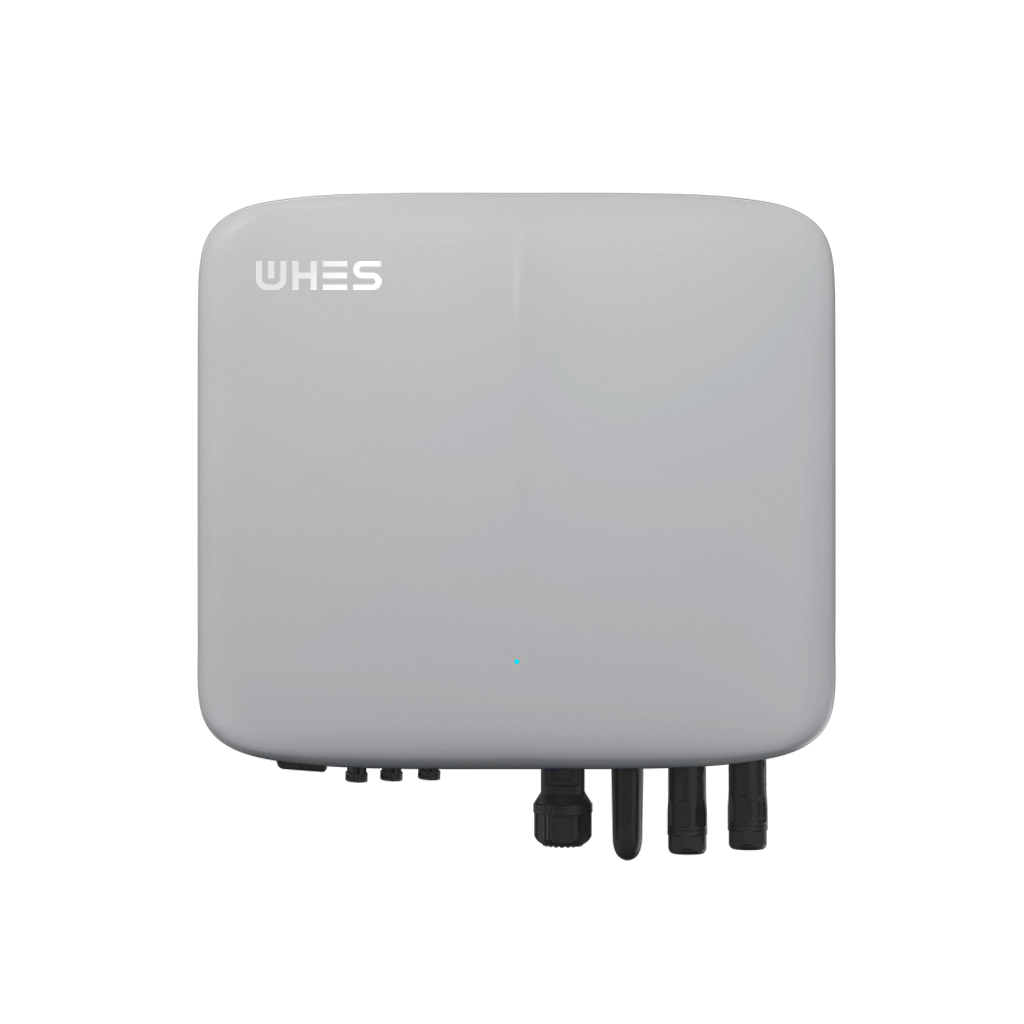
WHES has shaped a platform that treats validation as an artful proof: cloud orchestration for repeatable HIL scenarios, automated test scripts that mirror grid events, and telemetry capture that surfaces subtle performance drift. For teams wrestling with commissioning risk, this approach shortens the feedback loop between model and hardware and reduces the chance that a deployment becomes a live troubleshooting saga. When the grid wavers — a winter storm or sudden rooftop PV surge — the right pre-validated logic prevents alarm and preserves service.
Practical checklist: selecting a validation partner
Choose a vendor who can demonstrate these capabilities in straightforward terms: fidelity of grid models, repeatable real-time HIL cycles, and integration with your control stack and inverter firmware. Ask for examples of test scenarios run against actual controllers and a traceable history of issues found pre-deployment. Seek partners who understand round-trip efficiency, inverter dynamics, and BMS fault modes, and who will provide clear artifacts you can attach to procurement records and safety reviews — because contracts love proof as much as engineers love precision. —
Alternatives, trade-offs, and common mistakes
Some teams opt for expanded field trials or accelerated life testing instead of cloud HIL. These choices have merit when budget, timeline, or regulatory constraints demand them, but they carry trade-offs: field trials may be slower and less repeatable; accelerated aging can miss control-layer bugs. A frequent error is conflating “more tests” with “more meaningful tests.” Without scenario design that mirrors real network behavior, volume is only noise. Also avoid under-specifying acceptance criteria for SoC drift and inverter ride-through — those are common sources of late failures.
Advisory: three golden metrics to weigh every vendor by
1) Scenario fidelity: can they reproduce grid events and communications delays that matter to you, and do their models reflect your feeder topology? 2) Reproducibility and traceability: will the platform rerun tests identically and produce audit-ready logs for acceptance? 3) Integration maturity: do they support your inverter protocols, BMS interfaces, and SCADA hooks without brittle custom work? Prioritize vendors who answer these clearly; otherwise, you’re buying optimism instead of assurance.
Closing reflection and natural culmination
Choosing how to validate a battery storage system is a human decision as much as a technical one — it is about the promise you make to facilities, tenants, and grid operators. Let your criteria favor fidelity over flair, repeatability over anecdotes, and clarity over complexity. When those priorities align, the platform you pick becomes the quiet steward of reliability.
WHES stands where testing meets trust — a practical, real-time solution that turns uncertain deployments into predictable operations. —