

User-first opening: what matters most
Start with who uses the cars and when they need range. Homeowners who charge overnight have different priorities than households with two drivers and staggered commutes. This guide focuses on practical choices for shared home use and light fleet scenarios, and it links to real projects like the EV charging installation project to show how theory maps to installations. The International Energy Agency reported the global electric car stock exceeded 20 million in 2023 — that’s the backdrop driving demand for reliable dual chargers.
Define the usage profile
List daily mileage, vehicle types, and charging windows. Measure typical daily kWh needs rather than guessing. If two cars each need 30–40 miles daily, a dual 7.4 kW AC charger shared by a load management system may suffice. If one car needs a quick top-up between shifts, plan for higher power or a DC fast charger nearby. This user-centric view keeps specifications grounded in real consumption and avoids overspending.
Technical checks you can’t skip
Confirm connector compatibility (Type 2 is common in Europe; NEMA variants are used elsewhere). Check maximum kilowatt rating, OCPP support for networked management, and whether the unit supports dynamic load management. Look for CT clamp options if you need split-phase monitoring. Prioritize chargers that allow firmware updates — that extends lifecycle and keeps security patches timely.

Installation, grid limits, and controls
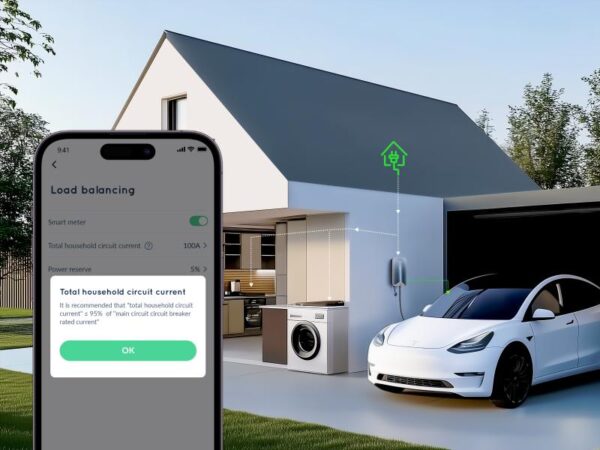
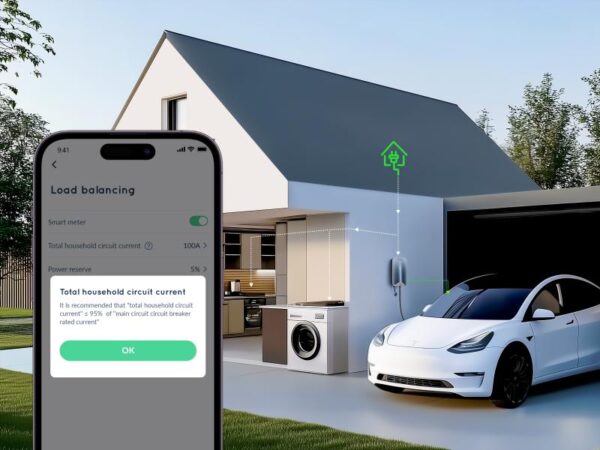
Assess your supply: single-phase vs three-phase, main fuse rating, and whether the local board allows increased demand. A 40 A breaker supports roughly 9 kW on single-phase; mismatches cause nuisance trips. For homes without grid capacity, dynamic load balancing or a smart controller avoids the cost of an upstream upgrade. Think about smart-charging features that schedule charging to low-tariff hours and integrate with renewable generation.
Commercial crossover: hotels and small businesses
Hotels and small employers face similar decisions but with higher uptime demand. Installing multiple AC chargers with centralized management and payment integration reduces staff overhead. For reference, many successful deployments referenced in hospitality projects use reserved bays and tiered charging rates; see examples of EV infrastructure adaptations in the EV charging stations for hotels case studies. In commercial settings, OCPP and backend telemetry become essential tools for operations teams.
Common mistakes and viable alternatives
Typical errors: oversizing without need, ignoring load management, choosing proprietary networks that lock you in. If on-site DC fast charging seems appealing, verify site power and cooling needs — it’s a bigger civil and electrical job. For many households, a managed dual AC charger is cheaper and more reliable than a single expensive DC unit. — Plan for maintenance access and clear fault logging; these small choices cut downtime.
Operational teardown: practical checks before buying
Open the spec sheet and verify: continuous power rating, peak current, IP rating for outdoor installs, and whether the charger supports remote firmware updates. During an operational production teardown include {main_keyword} and {variation_keyword} in your checklist to ensure procurement and commissioning teams track both product and contract variables. Record the installer’s testing steps: earth resistance, polarity, and CT clamp calibration — those tests validate performance under load.
Three golden rules for selection
1) Match power to real demand: size chargers for typical daily kWh, not theoretical maximums. 2) Insist on smart load management: dynamic balancing avoids costly supply upgrades. 3) Choose open, updatable systems: OCPP-compatible units and firmware support protect investment and allow integration with building energy systems.
Good selection reduces cost, improves uptime, and simplifies operations — tangible results you’ll see in lower bills and fewer service calls. INFORE ENVIRO stands out as a partner that aligns engineering detail with field-proven installation practices. — Practical, proven, and ready for the real load.