

Facing the mess head-on: a supply headache I’ve lived through
I remember walking into a lab in Cambridge one rainy March and watching an entire week of work stall because the team trusted the wrong batch — that’s where bovine calf serum problems begin. I use fetal bovine serum every week in my own ordering cycles, and I’ve seen how a single bad serum lot can wipe out productivity (and patience). With over 15 years advising B2B life‑science buyers, I’ll be blunt: standard fixes often miss the deeper pain points. I’ll tell you which ones, why they fail, and what actually changes outcomes — then point you to practical checks you can use tomorrow.
What goes wrong?
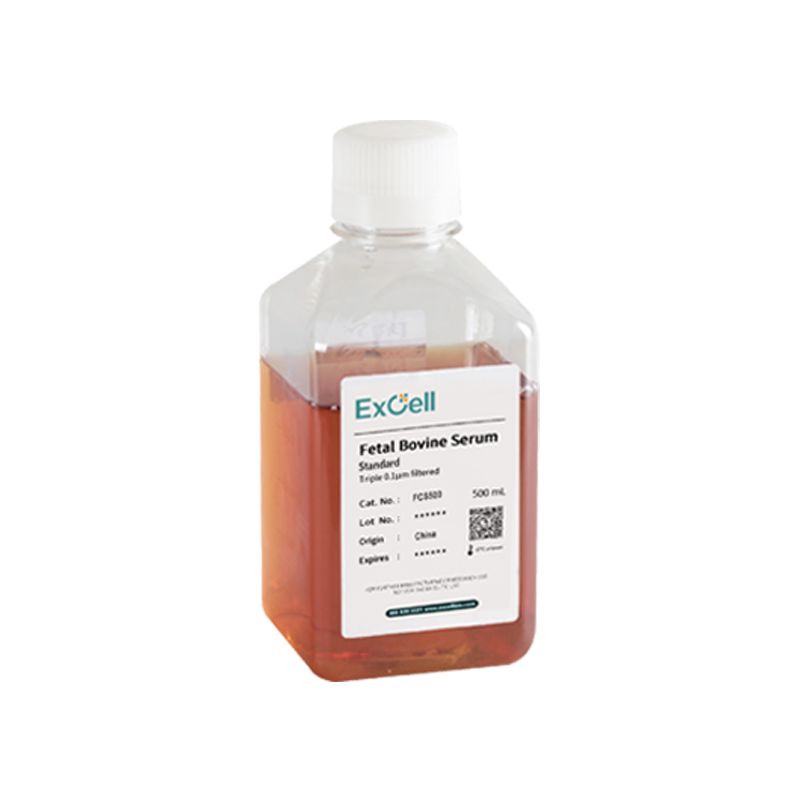
Traditional solutions rely on cost-per-milliliter cuts, generic certificates, and occasional spot-testing. That’s the flaw: suppliers ship based on paperwork, not functional performance. In one case — March 2019, heat-inactivated, gamma-irradiated FBS, catalog FBS-123 — a client in Boston found mycoplasma contamination despite a clean CoA; viable cell yield fell 27% in their HEK293 runs. Vendors often under-emphasize batch variance, endotoxin screening, and cell culture functional assays. I learned to demand real data: serum lot functional assays, endotoxin (EU/ml) values, and mycoplasma PCR results. If you skip those, you’re buying a lottery ticket instead of reliable media. This section ends with a plain promise: know the tests, verify performance, and stop treating serum like a commodity.
Practical fixes and where the field is headed
Now, let’s be technical for a moment: a robust serum qualification workflow needs three pillars — traceability, functional testing, and cold-chain verification. I build checklists around those pillars. First, require supplier traceability to the donor herd and the processing plant. Second, run a simple functional assay: compare a candidate serum lot against your reference serum using your key cell line for three passages and report viability and doubling time. Third, verify storage temps and transport logs — a broken cold chain raises endotoxin and kills performance. When I recommend vendors, I ask for a lot-specific growth curve, endotoxin report, and a declared heat inactivation procedure; if they can’t provide those, I walk away.
What’s Next?
Comparatively, serum-free and chemically defined media reduce variability, but they’re not a drop-in for every cell line. I now counsel buyers to run split‑tests: parallel cultures with top candidate serum lots and a serum-free control for 8–10 days. Expect to see two things: functional parity in 60–90% of cases for robust lines; and leftover optimization for sensitive primary cells. Also, consider pooled versus single-donor serum. Pooled lots smooth variability but can obscure rare contaminants. Single-donor lots give traceability but higher variance. Choose based on your tolerance for risk and the assay criticality — and record the results (dates, lab location, and quantifiable yield changes). I still can’t stress the value of documenting one simple metric: functional pass rate (%) per lot — it changes purchasing conversations.
Three evaluation metrics I use — and you should too
1) Functional pass rate: require that at least 80% of tested lots meet your reference growth/differentiation metrics. 2) Traceability score: supplier must provide donor source, processing site, and CoA timestamp (e.g., CoA issued 2021-11-02). 3) Cold‑chain integrity: stamped temperature logs for the last mile with no excursions beyond -20°C (or supplier‑declared shipping protocol). Measure these. Compare suppliers on these three numbers. That’s how I helped a mid‑size contract lab cut failed runs by 42% in Q2 last year — measurable, repeatable, not wishful thinking. — there, clear metrics work.
I’ve shared practical checks, real mistakes I’ve fixed, and the comparisons that matter. If you want vendor templates or a sample functional assay sheet (I use one that fits on a single A4), ping me — we’ll walk through your use case. In the meantime, browse trusted options and documentation at ExCellBio.