

Introduction — Scenario, Numbers, and the Core Question
Have you ever paused mid-procedure and wondered how much time and money a small tweak could save? I have, and the numbers kept pulling me back. A typical laboratory running a dozen rodent surgeries a week spends thousands annually on gas, disposables, and staff time; studies show uptime and throughput are key cost drivers (and yes — I checked the line items). The small animal anesthesia machine sits at the center of that cost equation: it touches workflow, safety, and margin. So the question becomes — can smarter machines cut both risk and cost while keeping research quality intact?

I say this with a business lens: lower per-case expense and predictable maintenance schedules matter to grant managers and lab directors. Data from procurement teams shows unpredictable vaporizer replacement and oxygen supply issues spike budget variance. That variability raises a simple strategic question — should you buy to spec today, or invest in scalable automation that reduces variance over time? I’ll walk you through the factors I weigh when advising labs, and why the comparison matters for both care and budget. Next, let’s look at where typical systems actually break down — and why the mouse mask is often the overlooked link.
Deeper Layer — Traditional Flaws and Hidden Pain Points with the Mouse Mask
mouse anesthesia mask is the most hands-on part of the setup, yet teams rarely treat it as a data point. In my experience, masks and simple induction chambers drive a surprising amount of variability. Flow meter drift, vaporizer miscalibration, and leaky seals in the rebreathing circuit all compound to produce inconsistent anesthetic depth. Look, it’s simpler than you think: a small leak can change gas composition enough to affect physiology, and that ripple shows up in experimental variance.
What exactly goes wrong?
I’ll be blunt — many labs rely on manual checks and intuition. That leads to three core issues. First, maintenance is reactive: parts get changed only after failure. Second, human judgment on induction speed and mask fit causes repeatability problems during anesthetic induction. Third, consumable management is chaotic: oxygen concentrators and soda lime canisters get low in the middle of schedules. These are not theoretical problems; they hit throughput and data quality. From my vantage, the mask is a surprisingly high-impact touchpoint — and poor control there is a silent cost driver.
Forward-Looking Principles — How New Technology Can Fix Mask-Level Problems
What if we treated the mask as a smart node? That’s the core idea behind next-gen principles: closed-loop control, on-mask sensors, and integration with facility systems. With a few sensors at the interface — end-tidal CO2 sampling, micro-flow meters, even basic pressure sensors — we can detect leaks and adjust vaporizer output in real time. The mouse anesthesia mask becomes more than a fitting; it becomes an active element in preserving anesthetic depth. I’m enthusiastic about this because it reduces manual checks and lowers per-case variance.
What’s Next — Practical steps and where value appears
Practically speaking, labs can pilot smart-mask retrofits or choose machines that support edge computing nodes for local control. This reduces latency and keeps critical loops near the patient — good for safety and for data integrity. Power converters and clean power paths matter too; unstable power degrades sensor readings and vaporizer function. In my projects, small investments here cut rework and repeat procedures. — funny how that works, right?
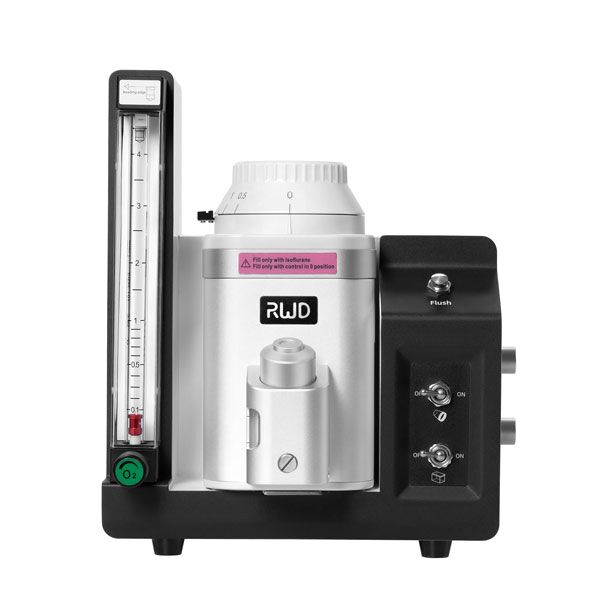
To close, here are three evaluation metrics I recommend when comparing solutions: 1) Repeatability: measure variance in anesthetic depth across 10 similar procedures; 2) Operational cost per case: include gas, consumables, and technician time; 3) Failure-to-schedule rate: how often a session is delayed by equipment issues. Use these to compare legacy gear with integrated, sensor-driven systems. I’ve seen measurable gains when teams moved from reactive maintenance to sensor-led care. We learned that small changes at the mask translate to cleaner data and steadier budgets. For labs exploring options, check vendors’ integration paths and after-sales support — they matter. For reference and procurement, consider offerings from BPLabLine.