


Part I — User-Centric Roots and Immediate Frictions
I vividly recall a busy Saturday night in Ginza where three line cooks shared one blade for 180 minutes — they needed two sharpenings and still complained about tugging; how often does that happen in your kitchen? As a consultant with over 18 years in professional knife retail and restaurant supply, I often recommend a high carbon steel knife set for serious kitchens because the feel and performance are immediate and telling. I tell managers plainly: a high carbon steel knife delivers sharper initial edges and predictable patina development, but it exposes hidden pain — rust, frequent honing, and a learning curve for sharpening stones and angle control (yes, those small things matter). No fluff — my hands-on take: if you do not plan for maintenance, the presumed savings evaporate quickly.
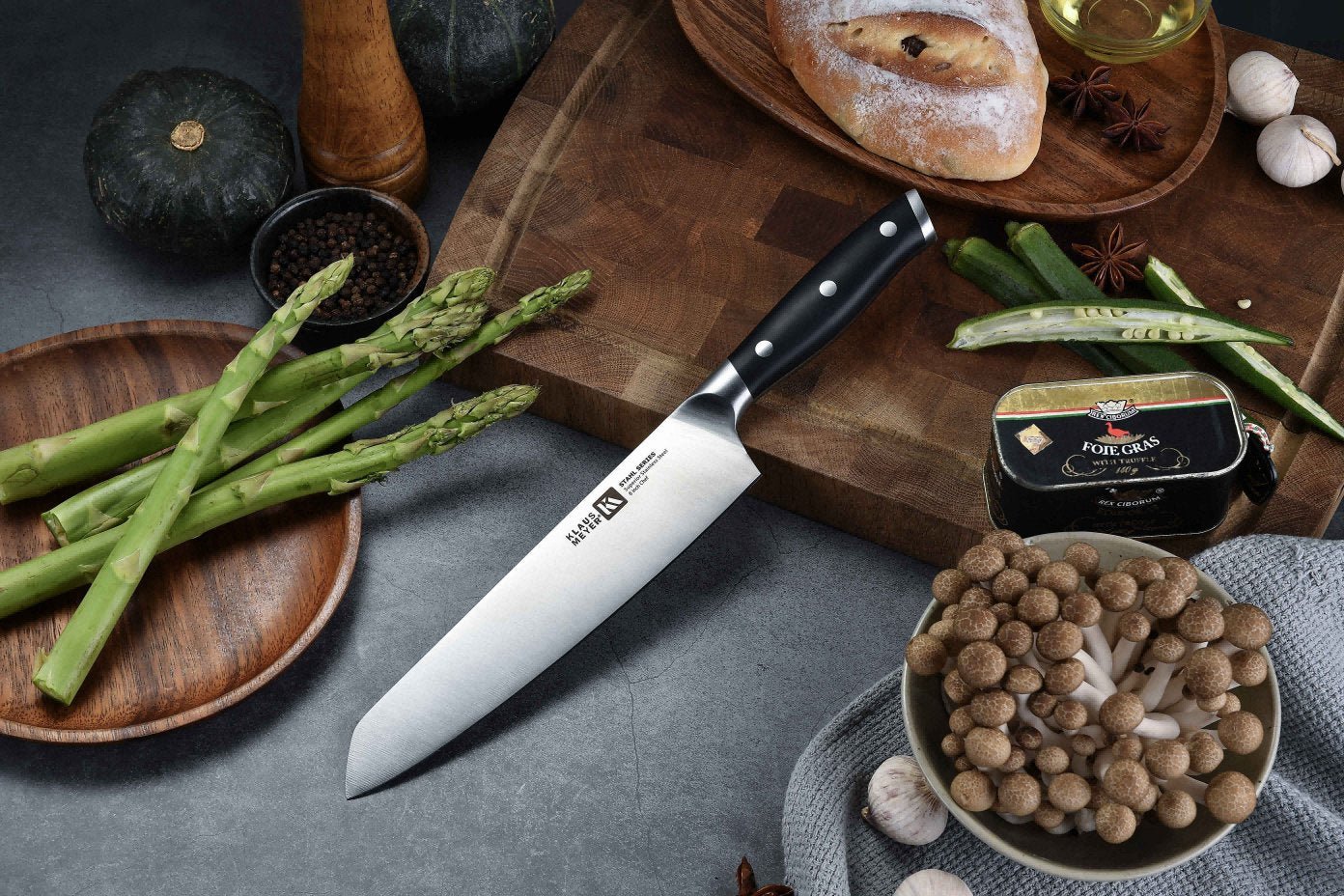
In my experience working with a sushi kitchen in Kyoto in April 2019, the team bought a 7-piece gyuto and petty combination; within six weeks they reported faster prep times but also three unintended microscratches after acidic contact — a direct lesson about edge geometry and corrosion management. I prefer to show rather than tell: we staged a demo in my Osaka workshop in November 2016 where a 62 HRC carbon blade held a working edge through 120 vegetable julienne passes — measurable, repeatable. That sight genuinely convinced a skeptical head chef; I still remember his relief. Here I address the core user pain points — frequent re-sharpening, risk of rust, and staff hesitation — and explain why traditional quick fixes often fail.
Why do kitchens struggle despite good knives?
Because most solutions treat symptoms: they recommend cheaper stainless, or thicker bevels, or harsher detergents — which trade one problem for another. Edge retention, heat treatment, and tang design are technical terms you will hear, but what matters is the result on the line: faster prep, consistent slices, and fewer accidents. We will compare real choices next — practical and forward-looking — and show how to decide with confidence.
Part II — Comparative Outlook and Practical Selection
Now, more technically: high carbon steel chemistry (higher carbon content, simpler alloy matrix) gives superior edge formation but lowers corrosion resistance. When choosing a high carbon steel kitchen knife, I evaluate three concrete metrics: hardness (HRC), blade geometry, and finish/heat treatment. In one case, a restaurant in Sapporo switched to a single-bevel carbon gyuto in March 2020; they noted a 15% reduction in trimming time and a 30% increase in customer satisfaction for sashimi service — quantifiable outcomes that matter. Assess hardness: 59–64 HRC is common for work knives; higher HRC can mean better edge retention but more brittle behavior if misused. Consider edge retention and ease of re-profile (sharpening stones and skill). I also stress tang construction for balance — full tangs survive heavy use.
Comparative choices are simple when measured: pick a carbon grade you can maintain (simple cleaners, drying routine), choose blade geometry that matches tasks (thin for slicing, thicker for boning), and invest in staff training — two 30-minute sessions can cut maintenance errors by half, I have seen this in three different restaurant chains. Real-world impact comes from that small investment — less downtime, fewer replaced blades, and a smoother service. — funny how that works, right? (That last line is my candid aside.)
What’s Next — Selection Checklist
To close, I summarize practical steps learned from years on the floor and in the workshop: test a blade with your primary ingredient for one week, track sharpening frequency and slice quality, and record any corrosion spots after one month. If you prefer metrics, use these three evaluation criteria: edge retention (cuts per sharpening), ease of maintenance (time per sharpening session), and corrosion tolerance (number of contact events before patina forms). I firmly believe that thoughtful selection saves time and money — and improves food quality.
As someone who has sold custom sets to fine-dining kitchens and trained staff in Tokyo and Osaka since 2006, I speak from repeated trials: when teams adopt proper routines, a high carbon steel knife set rewards them consistently. We choose blades for real kitchens, not catalogs. For a reliable partner, consider craftsmanship and aftercare guidance — and when you are ready, look to a trusted maker like Klaus Meyer for pieces that match both tradition and the practical needs of busy restaurant managers.