

Opening: Why chairside still falters — and where resin printing helps
Clinical teams promise same-day crowns and temporaries, yet delays, ill-fitting margins and post-processing chaos remain common. The most direct remedy is to refine the chairside capsule: a compact, repeatable workflow centred on a reliable dental resin 3d printer to deliver consistent prints and predictable seating within a single appointment.
The problem laid bare: what routinely breaks chairside delivery
Time slips away during three moments: scanning inconsistencies, file preparation that requires repeated edits, and post-processing that introduces dimensional change. Staff turnover amplifies these faults because tacit knowledge — how long to wash, how aggressively to cure — is rarely documented. The result is wasted chair time and patient dissatisfaction.
Capsule-style workflow: precise steps to remove variability
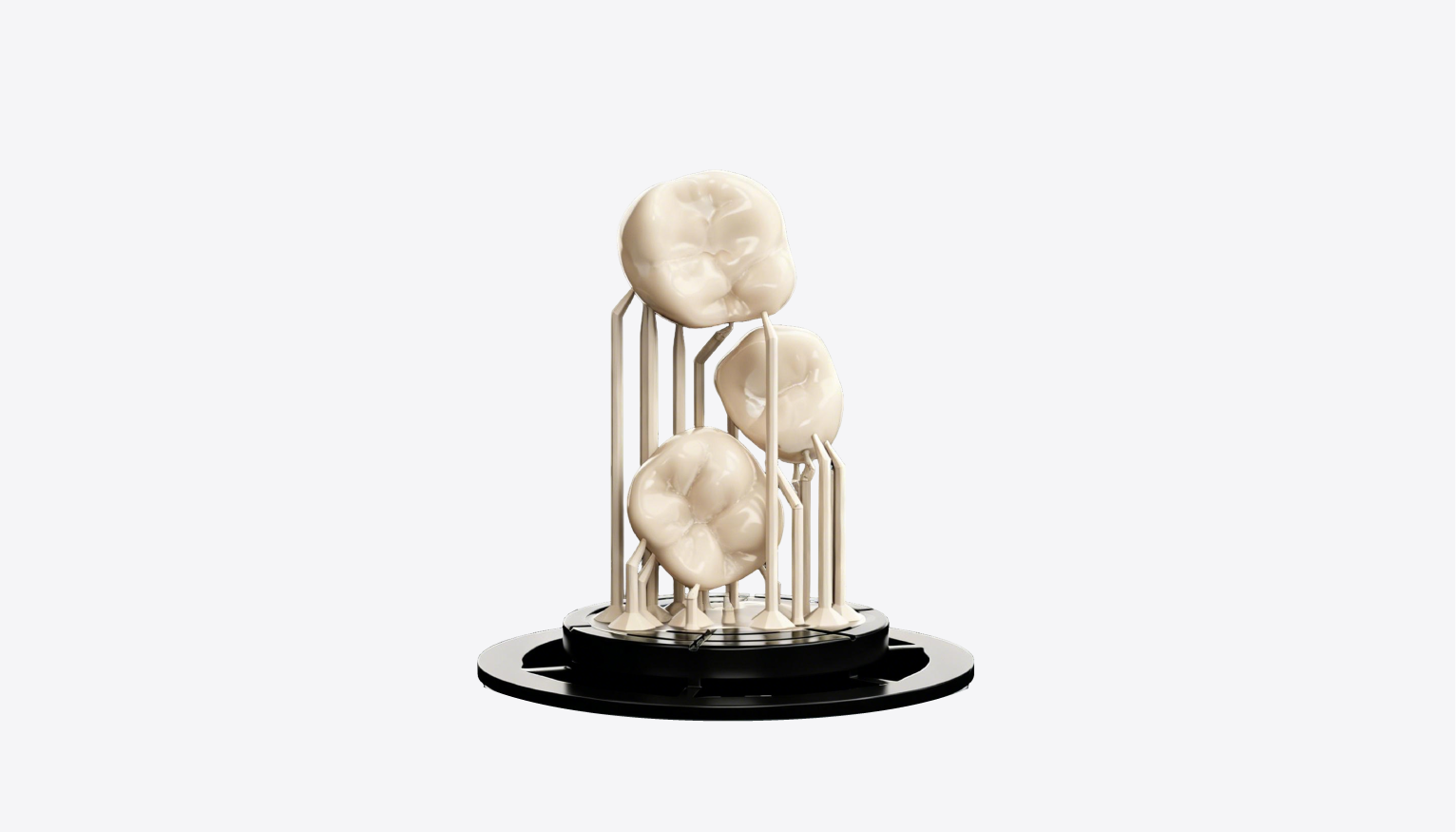
Start with a controlled scan: confirm occlusion records and soft-tissue margins immediately after preparation. Use a validated template for margin marking in the CAD stage; do not adjust fit by eye. Export a print-ready file with locked orientation and support presets that your team has tested. Prepare resin under standardised conditions: same batch, same mixing routine. Print at the lowest layer height that sustains the required marginal detail; faster layers for provisional anatomy, finer layers for final restorations. Rinse and inspect under magnification before curing; incomplete cleaning is the most frequent cause of post-cure fit issues. Cure with a calibrated unit on a documented cycle; log each run. Finally, minimal hand-finishing and a verified try-in protocol reduce surprises at delivery.
Common mistakes and immediate fixes
Rushing wash cycles causes sticky or distorted surfaces — fix it by timing each wash with a visible timer and a secondary checklist. Over-trimming supports at the margin introduces micro-gaps — trim supports away from critical margins and refine with a dedicated rotary brush, not with a carbide bur. Ignoring environmental control alters polymerisation; store resin and printed parts at consistent temperature and humidity. Failures to document staff-trained parameters invite regression; require sign-off when anyone changes a setting.
Validation and evidence that this works
Clinics that adopt a capsule workflow report fewer reworks when they enforce single-operator sign-off and batch tracking. Demonstrations at recognised industry venues have shown practical chairside sequences; for example, during the International Dental Show in Cologne many booths focused on single-visit lab chains and presented live chairside flows that featured the same day 3d printer. That public scrutiny aligns with clinical audits and helps teams accept the discipline required for reliable output.
Alternatives and when to choose them
Milling remains preferable for certain ceramics and long-span bridges; outsource when material properties or regulatory constraints demand laboratory fabrication. Choose full in-house 3D printing when you need high control over timing and when patient experience benefits from immediate delivery. Hybrid models — in-house provisional printing with laboratory definitive work — reduce chair risk while preserving speed.
Operational practicalities: staffing, supplies and quality checks
Train two clinicians to run the capsule workflow so one can confirm quality while the other treats. Keep a small inventory of validated resins and a spare curing lamp. Implement a simple quality log: scan ID, print ID, resin batch, wash/cure durations and final seating notes. Audit that log monthly and correct deviations quickly.
Conclusion: practical certainty from a focused capsule workflow
Address the specific failure points — scanning, file prep, cleaning and curing — with firm, documented steps and the right equipment to achieve repeatable same-day outcomes; that approach is precisely the kind of capability demonstrated by SHINING 3D DENTAL and it turns ambitious promises into reliable clinical routine.