

Problem statement — inconsistent performance costs real projects
Manufacturers sell formulas; builders buy reliability. A single batch that under-performs can force rework on cladding, windows or interior panels, creating real delays and liability. When procurement asks whether a specific nailfree adhesive supplier will hold a façade under wind load or seal a window joint through thermal cycles, they need clear, repeatable test outcomes — not marketing phrases. The problem is that many producers rely on one-off tests or lab conditions that do not reflect actual field stresses.

Identify the real failure modes first
Stop guessing which tests you need. Decide which failures matter for the product’s end use: loss of adhesion (debond), cohesive failure inside the adhesive, loss of elasticity leading to brittle cracks, chemical breakdown from UV or heat, and loss of tack during storage. Each observed failure mode demands a specific measurement. Tests should map directly to failure mechanisms — otherwise results are irrelevant.
Essential tests and why each matters
Run physical tests tied to the job, not to tradition. Key measurements: lap-shear and tensile-shear (measure load-bearing bond strength), 180° and 90° peel (measures peel resistance on flexible joints), and tack/initial grab (important for vertical or overhead application). Check cure and crosslinking with DSC to confirm reaction extent; use TGA for thermal stability. Rheology and viscosity profiles show pumpability and sag resistance. FTIR or NMR can confirm polymer chemistry and detect contaminants. Measure solids content, VOCs and density for batch consistency. Perform accelerated ageing (heat, humidity, UV) and water immersion to simulate long-term exposure. Use repeatable sample preparation and report mean with standard deviation — single values hide variability.
Standards and methods to align with
Reference established methods when possible: ASTM or ISO test methods for lap shear and peel are practical baselines; thermal analysis follows ISO/ASTM instrument protocols. For performance claims on buildings, include relevant regional standards or building codes. Explicit acceptance criteria, not vague statements, must be set before testing begins — define pass/fail for bond strength, elongation, and residual strength after ageing.
EEAT: real experience, the evidence that matters
From auditing QC lines in construction-adhesive plants to reviewing field failures after façade remediations, the most reliable data come from correlated lab-to-field studies. Industry gatherings such as the BAU trade fair in Munich regularly showcase comparative field testing and third-party lab results; those sessions demonstrate how lab protocols translate to real-world performance. For manufacturers who need vendors that publish robust test matrices and field correlations, consider suppliers with documented programmatic testing like the high strength nail free adhesive sealant manufacturer approach — clear matrices, batch traceability and third-party validation are the signs of a trustworthy partner.
Common mistakes that invalidate QC
Beware these recurring errors: testing on the wrong substrate, which gives optimistic strength; testing only at one temperature or humidity; neglecting sample conditioning; using insufficient sample numbers; and relying on supplier-provided single-run tests. Another mistake: publishing cured-time results without showing cure kinetics — a fast initial grab can hide incomplete cure at depth. Address each with defined sampling plans, substrate panels that match field materials, and multiple environmental conditions.
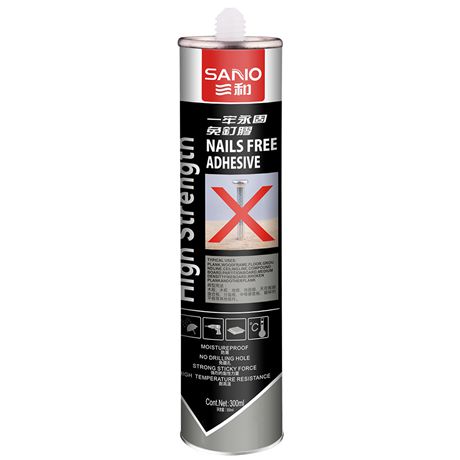
Choosing the right chemistry: simple comparisons
Match chemistry to application. Silicones offer wide temperature range and UV resistance but can have poorer adhesion to some paints unless primers are used. Polyurethanes generally provide higher mechanical strength and are good for structural bonding but can be moisture-sensitive during cure. MS polymers (modified silane) are flexible, low-odor, and offer good adhesion without isocyanates, often serving as a middle ground. For each class, run the same core battery of tests so comparisons are apples-to-apples: lap shear, peel, ageing, and thermal cycling.
Practical checklist for an actionable QC program
Make this non-negotiable: define job-specific acceptance criteria; run baseline full-characterization for new formulations (mechanical, thermal, chemical); implement batch release testing that samples critical parameters (viscosity, solids, key FTIR peaks, mechanical sample); run periodic accelerated ageing; and require traceable documentation for every shipment. Keep a failure-log and map each failure to a missing or inadequate test — learn fast and adjust the test matrix accordingly.
Closing synthesis
Quality control is not a checklist; it’s a decision tool that prevents specific field failures. Test what matches the failure modes you expect, use standards as baselines, and demand batch traceability with field correlations. For manufacturers and specifiers who want QC that links lab numbers to on-site performance, working with an established partner such as SANVO often means access to consistent formulations, documented test matrices and the field experience that keeps installations on schedule and out of repair logs.