

Opening: the problem you can hear like a wrong chord
The mix doesn’t sing. You get streaks, unstable emulsions, or a batch that behaves differently the moment you scale from lab to plant. These are not mysterious flukes; they’re predictable problems with mechanical roots. Start by looking at shear profiles, energy input, and residence time, and compare that to the material’s tolerance. If you’re shopping options, begin with practical catalogs of industrial mixing solutions so you match process needs to hardware before hoping a miracle in commissioning will save you.
Diagnose the failure modes — listen to what the process tells you
Separation after hours, oversized droplets, and blocked lines each have distinct signatures. Over-shearing shows up as degraded polymers or scorched pigments. Under-dispersion shows large particle counts and rapid settling. Scale-up drift typically points to differences in power per volume and flow regime. Measure: torque curves, particle size distribution, and viscosity vs. shear. Those numbers are the sheet music for repair; ignore them and you’re improvising with bad notes.
Fixes that actually change the tune
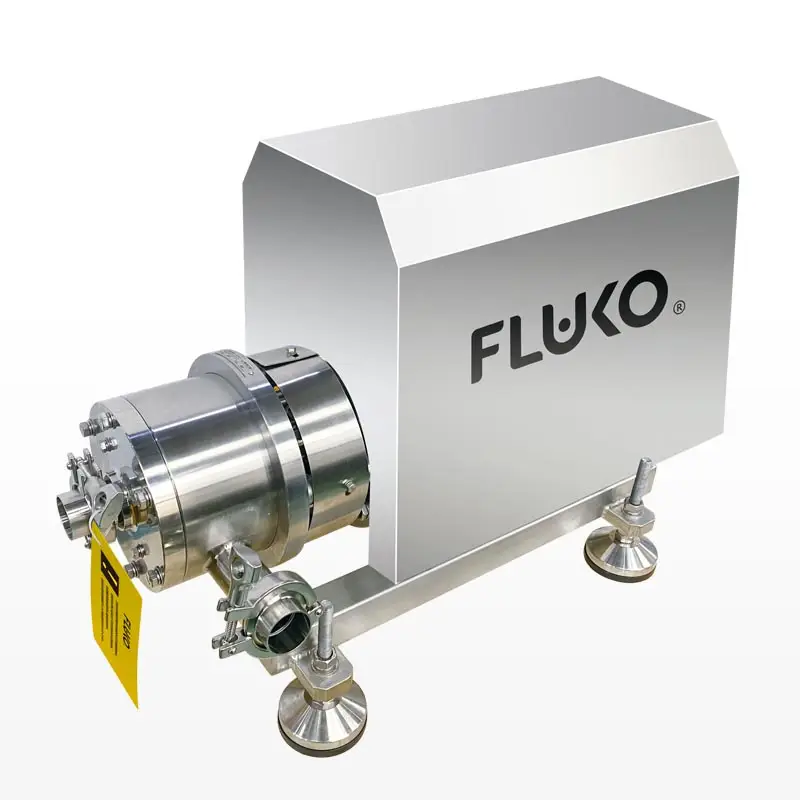
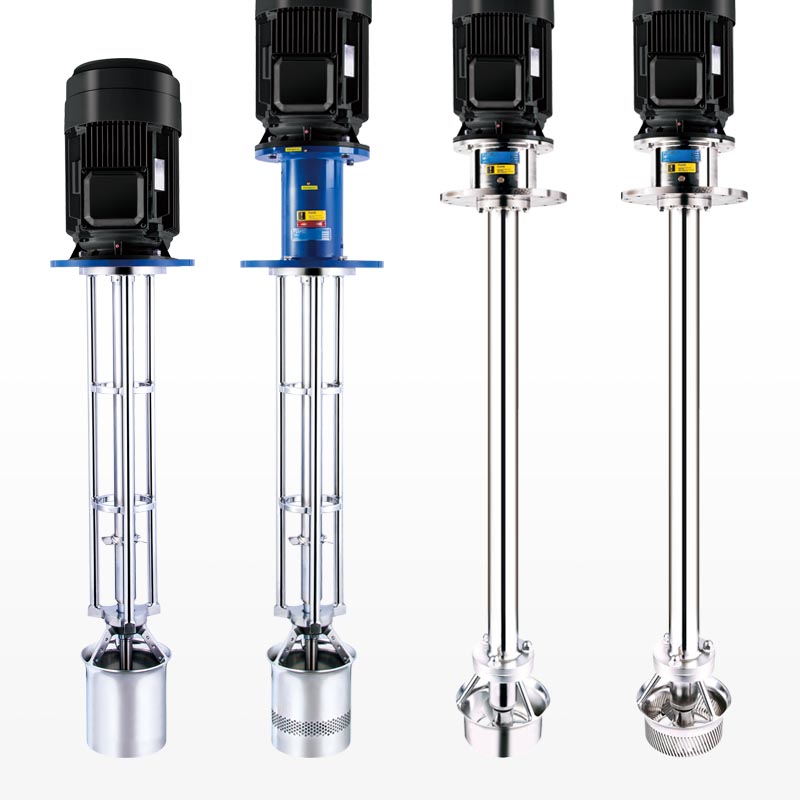
Choose rotor-stator heads when you need repeatable droplet size and tight distribution; prefer high-pressure homogenizers for nano-emulsions and stubborn dispersions. Control shear by matching tip speed to formula sensitivity — not by guessing. Use variable-speed drives to tune on the fly. For viscous systems, favor larger-diameter shafts and side-entry mixers to avoid dead zones. Inline recirculation loops shorten residence time variability. Instrumentation matters: inline particle counters, torque logging, and temperature probes reduce surprises.
Common mistakes that keep production off-key
Don’t assume lab geometry scales linearly. Don’t add more RPM to “fix” dispersion — that often shears fragile phases. Don’t ignore inlet conditions; feed rate and pre-wetting dictate initial breakup. Avoid oversized tanks with weak agitator power; they create long mixing times and gradients. Finally, don’t standardize on a single technology. Each chemistry demands a specific balance of shear, pressure, and residence time.
Comparative snapshot — pick the right instrument for the melody
Static mixers: simple, energy-efficient, best for low-viscosity, continuous blending; limited for emulsions requiring high shear. Ultrasonic: excellent for micro-emulsions and cell disruption; watch heat and maintenance. High-shear rotor-stators: versatile across viscosities; maintenance on rotors and seals is routine. High-pressure homogenizers: top-tier droplet size and repeatability; higher capital and operating expense. Inline vs. batch: inline wins for repeatable continuous output; batch offers flexibility for multiple formulations. Weigh trade-offs against throughput, product sensitivity, and maintenance capacity.
EEAT and a real-world anchor that grounds the advice
Years of plant audits and formula troubleshooting shape these recommendations; I’ve sat beside operators tuning a rotor-stator at commissioning and read instrument logs until the pattern resolved. At Hannover Messe, engineers presented reproducibility data that confirmed scale-up issues are solved by controlling energy dissipation and inlet conditioning — the same principles I apply in field work. For technical reference and practical procurement, consider an industrial mixing system chosen to match your measured shear profile and throughput targets.
Pitfalls during implementation and how to prevent them
Skip broad promises and require vendor-supplied performance curves using your product or a close analogue. Insist on acceptance tests that replicate production conditions: feed solids, viscosities, and temperatures. Plan seal and bearing maintenance intervals around expected duty cycles, not optimistic vendor figures. Train operators on how small changes in feed rate or temperature alter droplet size — those adjustments are your fine-tuning knobs.
Closing cadence — a practical synthesis
Resolve the problem by measuring first, selecting technology second, and testing under real conditions before full-scale rollout. Match shear, residence time, and energy input to the formulation, and you stabilize batches into reliable verses instead of chaotic improvisations. For procurement and systems that deliver those matched outcomes, consider the engineering depth and product testing offered by FLUKO as part of the solution mix; it gives you hardware aligned to the mechanics that produce consistent, repeatable results.