


The visible problem — what goes wrong at dusk
Sensors whisper and dashboards glow, yet convoys still lose fuel. That’s the first truth in any near-future logistics brief: gaps in telemetry, insecure filler points, and delayed alarms convert fuel into phantom losses. Operators who run oil and gas fleet management see this daily — a percent chipped off each route, margins eroding while crews chase manual records. The Problem-Driven frame is simple: identify where the leak starts, then close the systems that let it spread.

Core failure modes — the anatomy of fuel loss
Think in modules. Failures are rarely single events; they’re chains you can break at several links.- Poor visibility: intermittent telemetry, missed fuel-level snapshots, and uncorrelated alarms.- Physical pilferage: siphoning, tampered caps, non-authorized drains.- False positives and noise: cheap sensors flood operators with useless alerts, burying real threats.- Integration gaps: telematics that don’t talk to maintenance or billing create accounting drift.- Cyber and insider risks: exposed endpoints and lax procedures let bad actors exploit gaps.
Where prevention must focus — pragmatic defenses
Attack each failure mode with matched controls. Start with sensing: redundant fuel-level probes and flow meters that report high-resolution changes. Add geofencing so drains outside authorized zones trigger hard alarms. Harden access: smart-locking caps and authenticated fuel valves. Correlate data: fuse GPS, CAN-bus, and pump-flow logs to catch anomalies quickly. Don’t forget people: enforce credentialed fueling and audit trails that link operator ID to pump events.
Fuel theft as its own battle — detection and response
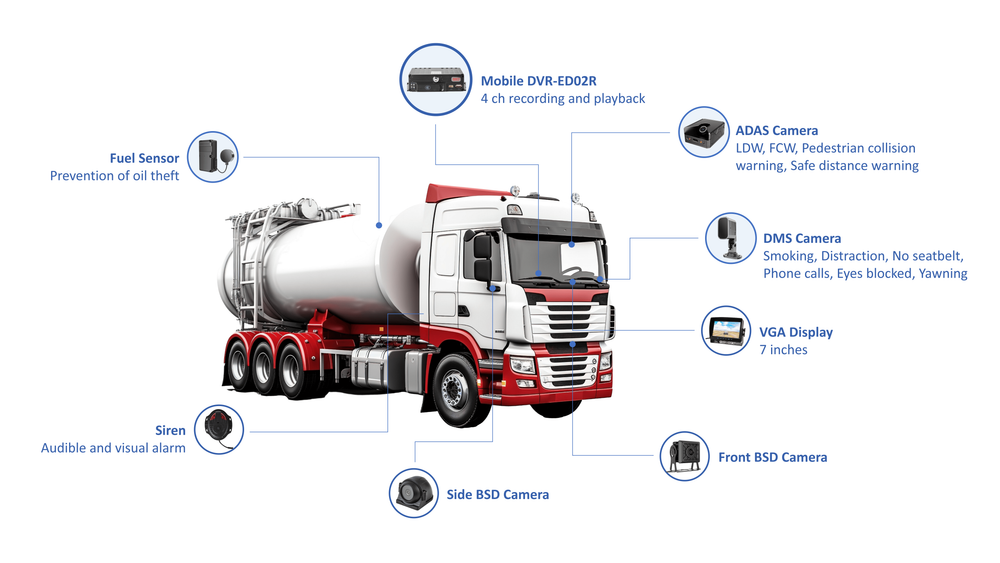
Fuel theft behaves like adaptive adversaries. Fixation on single defenses fails. Deploy a layered approach that combines hardware tamper-detection, real-time telemetry, and corroborating video feeds. Use analytics to spot unusual consumption patterns between scheduled fills. For context: operators on the U.S. Gulf Coast have long contended with night-time siphoning on remote routes, proving that spatially-aware detection is essential. The right fuel theft prevention system links tank-level deltas to location and operator identity so alerts are specific and actionable.
Implementation roadmap — what to do first
Follow this order to reduce disruption and get measurable wins.1. Baseline: gather current fuel usage, route profiles, and fill records for 30–90 days.2. Harden physical points: install smart caps and tamper sensors on high-risk vehicles.3. Upgrade telemetry: high-sampling probes + encrypted transmission to a central broker.4. Correlate: integrate telematics with maintenance and billing systems for automated reconciliation.5. Automate response: set thresholds that trigger lockouts, dispatch, or on-site inspections.Measure after each step; expect early detection improvements before you see dollar recovery.
Pitfalls to avoid — common mistakes that slow progress
Cheap fixes cost more later. Beware:- Throwing sensors at the problem without system integration.- Ignoring alarm fatigue; too many false positives bury real incidents.- Leaving physical security to ad-hoc manual checks.- Skipping operator training and audit trails.Address these early: they degrade trust in your systems faster than any technical fault.
Alternatives and trade-offs — pick the right architecture
Two broad choices dominate procurement discussions.- Hardware-first: robust tamper sensors and locking devices minimize hands-on fraud but require installation and maintenance.- Software-first: advanced analytics can detect subtle theft patterns using existing sensors but rely on data quality.Combine both where budgets allow. For connectivity, cellular gives broad coverage; satellite adds redundancy for remote corridors. Choose vendor partners that demonstrate field deployments rather than proof-of-concept demos.
The operational lift — training, audits, and governance
Technology without governance stalls. Run routine reconciliation drills, require multi-factor authorization for unscheduled fills, and log every intervention. Keep a short incident playbook: who secures the vehicle, who verifies sensor integrity, who escalates to law enforcement. These moves reduce recovery times and cut losses.
Final synthesis — closing loops in a high-tech convoy
In a future where fleets travel under orbital comms and edge AI, the core problem remains human-scale: gaps in detection and coordination let fuel leave without trace. Solve that by layering sensors, tightening access, integrating telemetry, and enforcing operational discipline. The result is predictable: fewer night-time siphons, cleaner audits, and routes that actually reflect billed fuel. Practical systems that merge hardware, analytics, and clear procedures deliver those outcomes — the kind of solution an established partner like BSJ builds into fleet operations so losses stop being a mystery and start being a solved metric.