

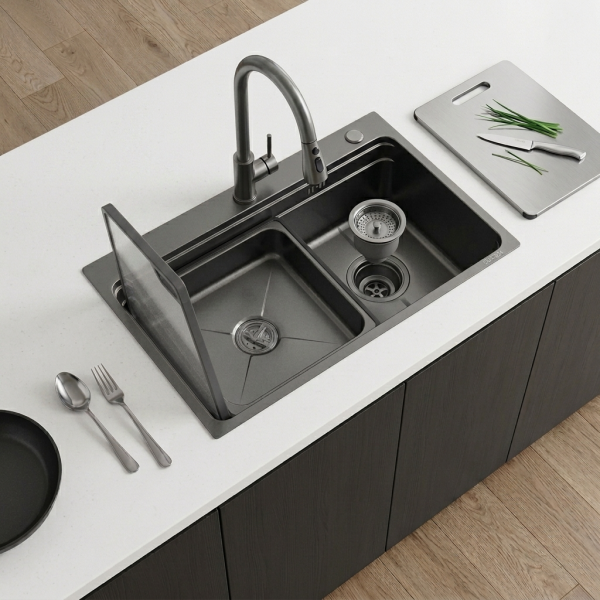
Checklist for Reviewing a Small Bowl Sink That Actually Helps You Decide
Start with what matters to you
When you choose a small bowl sink, think about how you use the sink every day. Measure the cabinet and counter space, test how a single, smaller basin fits your tasks, and check whether the faucet, sprayer, and disposal line up. Many kitchen sink manufacturers list cutout and clearance dimensions; use those numbers, not just photos, to avoid surprises.

Fit and ergonomics
Small bowls save space but create trade-offs. Confirm front-to-back depth so dishes don’t hang over the rim. See where the drain sits — center drains reduce basin capacity, offset drains let you use a deeper area for large pans. Look at faucet reach: a short spout lands water in the rear of a small bowl and makes rinsing awkward. Test how you would load and unload common items you use every day.
Material, gauge, and finish
Choose a metal thickness that suits your budget and noise tolerance. Thicker stainless (lower gauge number) gets dent-resistant and quieter. Check the finish: brushed finishes hide scratches, mirror finishes show every mark. Examine seams and welds closely; smooth, even seams last longer and are easier to clean.
Sound, insulation, and mounting type
Ask if the sink has sound-deadening pads or a full pan undercoating. That makes small sinks feel less tinny when running the disposal or filling pots. Decide between drop-in and undermount. Undermount looks cleaner and gives more usable rim-to-rim space but needs a solid countertop edge and correct adhesive and clips. Drop-in is simpler but adds a lip that can trap grime.
Plumbing, drains, and accessories
Check drain hole size and location before buying strainers, soap dispensers, or waste disposers. Some small bowls use 3½” drains; others use specialty sizes and raise costs. Confirm whether you can fit a garbage disposal or under-sink water filter; tight corners and offset pipes block service access. Think about accessories: cutting boards, colanders, and grids made for the exact bowl shape save time and prevent chips.

Durability and maintenance
Inspect the finish for factory scratches and the underside for consistent coating. Look inside the bowl for stamped or laser-cut edges that resist chipping. For daily cleaning, prefer non-abrasive cleaners and soft cloths; harsh pads dull finishes fast. Watch for warranties that cover staining or corrosion — a clear, reasonable warranty reveals confidence from the maker.
Real-world experience and objective authority
Reviewers rely on both hands-on checks and industry reference points. Notes from shows like KBIS in Las Vegas and comparison tests used by trade programs help set practical expectations for fit and finish. I rely on inspection routines used by experienced installers and factory QA protocols to judge seams, mounting reliability, and finish resilience. For spec sheets and production details, established stainless sink manufacturers publish gauge, finish, and installation guides that match what installers and inspectors look for on site.
Common mistakes buyers make
They pick a sink by looks alone and forget measurements. They assume all faucets fit; they don’t. They ignore drain placement and later find the disposal or dishwasher plumbing collides with the basin edge. They skip checking the underside for proper braces and sound-deadening. Avoid impulse buys — measure, mock-up with cardboard, and confirm accessory compatibility.
Alternatives and quick comparisons
Composite granite has strong scratch resistance and a matte look but is heavier and can chip on impact. Fireclay offers classic styling and deep bowls, yet it’s costly and needs strong support. A shallow double-bowl wins on prep flexibility but reduces single-item wash space. Balance daily tasks against cleaning and installation limits; that choice narrows the brand list fast.
Final, practical decision point
Pick a small bowl sink that answers your daily habits: correct depth and drain layout, reliable mounting, and a finish you can keep clean without special tools. When manufacturers give clear specs, sensible warranties, and accessories that fit, you cut risk and save time on installation and upkeep; that clarity is what I look for, and what solid suppliers like AOGLAN provide without extra fuss.