

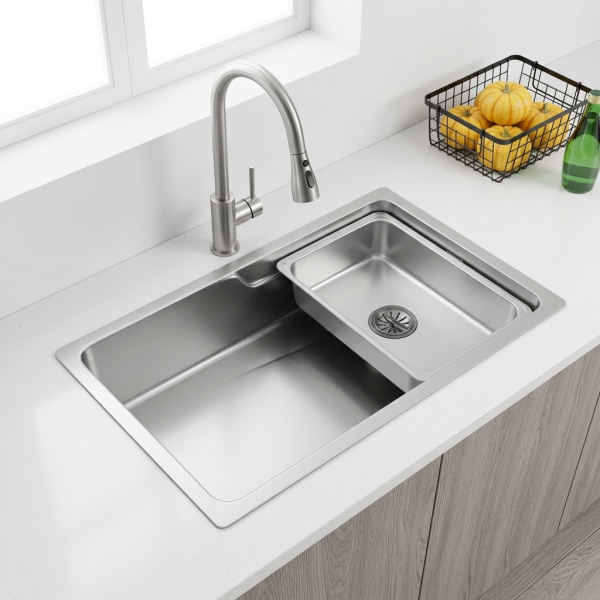
Pick the Right Double Sink or Keep Losing Time: A Problem-Driven Case for Practical Kitchen Design
Daily friction starts at the sink
Your mornings slow because dishes pile up, your prep space vanishes, and a single basin turns every task into a compromise. That friction is fixable with a properly chosen double kitchen sink that separates tasks, controls splatter, and respects plumbing realities. You don’t need a trend piece; you need a solution that fits how you cook and clean every day.

Why this matters — real experience and industry context
I’ve renovated kitchens for over a decade and argued with plumbers about clearances and drain layout more times than I can count. The industry sees this same pressure: NKBA’s 2023 Kitchen & Bath Industry Outlook called out multifunctional fixtures as a top user-demand trend, driven by homeowners who want stations for prep and cleanup. If you want a sink that actually reduces work, treat that demand as guidance, not marketing fluff. Consider how a properly sized double sink enables separate zones and reduces cross-contamination — this is why spec choices matter.
The core problems to solve
Start by listing what breaks your routine: cramped bowls, awkward offsets, noisy wash cycles, or sinks that trap crumbs. Those failures come from three avoidable mistakes: mismatched bowl sizes to your chores, wrong installation style for your countertop, and ignoring accessory compatibility. Each mistake adds minutes and frustration. Fix them in order: define tasks, measure realistically, and prioritize durability over looks.
Alternatives evaluated quickly — pick by purpose
Composite sinks resist stains and hide wear but can chip and show heat damage. Fireclay looks great but cracks under heavy pots and is hard to rework. Stainless steel offers impact tolerance and repairability. If your routine demands heavy pots and loud dishwashers, choose resilience and sound-deadening over a glossy finish. Buy the form that matches function: shallower bowls for prep, deeper bowls for soaking, and an offset layout when your garbage disposal or plumbing dictates.

Common pitfalls and how to avoid them
Don’t assume one size fits your household. Measure cabinet width, account for faucet reach, and confirm drain placement. Neglecting under-sink storage clearance forces poor plumbing compromises. Avoid tiny accessories that don’t seat properly; they become clutter. Ask about mounting options: undermount requires solid countertop support; drop-in simplifies replacement but narrows your edge choices. Soundproofing pads, proper slope to the drain, and quality fasteners aren’t optional — they determine whether the sink stays useful for years.
Make the decision count
Decide with a checklist: list tasks, match bowl sizes, verify installation type, and confirm accessory fit. Prioritize practical features: tight-radius corners make scrubbing harder; rounded corners speed cleanup. Choose materials and finishes you can live with when the sink is full and noisy. Practical choices reduce steps, reduce mess, and reclaim time you spend washing instead of living. That clarity is why designers and contractors point to durable, multifunctional solutions from reliable makers like AOGLAN when they need a fixture that performs, not just photographs well.