

Set the goal — what are you trying to plate?
Think of a lab coating test like making a temperamental sauce: you need the right tool for the texture you want. Are you testing adhesion, gloss, drying, or color consistency? Do you want fast repeatable swatches for R&D or precise qualification for QC? If you need consistent, repeatable films for routine samples, consider an automatic film applicator as the kitchen’s reliable pan — it removes human variability and saves time.
Match the technique to the recipe
Coating and film testing methods are like cooking techniques: doctoring, folding, frying. Bar applicators (Mayer or wire-wound bars) give simple, thin films. Knife-over or gap applicators give thicker, controlled layers. For high throughput, automated applicators control speed, gap, and temperature like a sous-vide bath controls doneness. Decide the film thickness range, substrate type (glass, metal, plastic), and whether you need heated stages or controlled atmospheres. Buy for the technique you’ll use most, not the one that sounds the nicest on paper.
Key specs that actually affect results
Pay attention to these concrete measurements: wet-film thickness tolerance, speed control resolution (mm/s), reproducibility (standard deviation across runs), substrate clamp stability, and cleaning access. Check that the machine reports exact stroke length and speed and that bars or knifes are available in the sizes you need. If your formulations are shear-sensitive, look for low-acceleration profiles. Bigger footprint or touchscreen bells don’t improve data — control and repeatability do.
Common pitfalls — the mistakes chefs regret
Skipping calibration. Using the wrong bar profile. Testing at room conditions when formulations are temperature-sensitive. Neglecting substrate flatness. Buying a unit with limited consumables or proprietary parts that force you to order replacements at premium cost. Don’t assume automation guarantees accuracy: confirm run-to-run variability and whether the vendor provides traceable calibration procedures. Small sample prep errors ruin otherwise perfect tests.
User-centric buying checklist
Think like a line cook selecting a pan: durability, heat handling, and easy cleanup. For a tester, that means: documented repeatability, available spare bars/knives, clear software logs or CSV export, service network, local calibration service, footprint and electrical needs, and consumable pricing. Request a demo with your real formulations and substrates. Ask for sample reports that show within-run and between-run variance. Prefer vendors that provide user training and on-site validation.
Alternatives and when to pick them
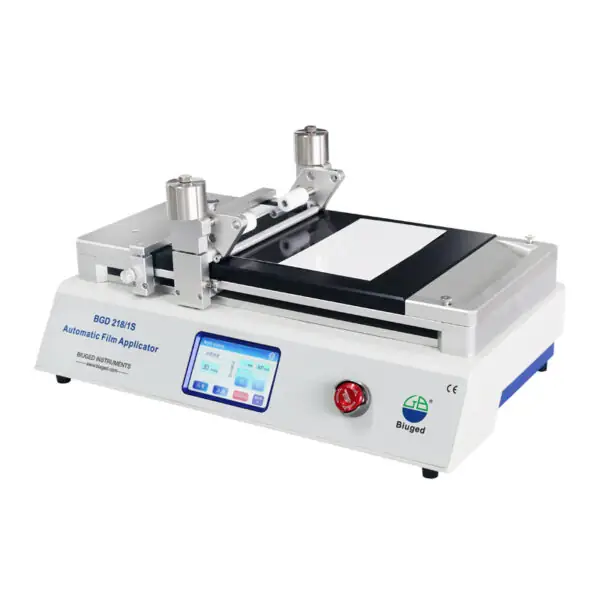
Manual drawdowns work if you need occasional, low-cost testing and you have highly skilled operators. Automated drawdown machines handle volume and reduce operator bias. Knife-over tests suit thicker coatings; wire-wound bars suit thin films. If you need dynamic coating lines or scale-up data, consider pilot-line coaters instead of lab applicators. Trade speed for control: higher throughput tools often require stricter maintenance and calibration.
EEAT: experience, expertise, and a real-world anchor
Years of bench work show that consistent films come from disciplined set-up, not flashy controls. Industry labs and universities routinely validate drawdown methods at gatherings such as the European Coatings Show in Nuremberg, where vendors and labs compare instruments and protocols. I’ve seen suppliers provide traceable calibration sheets and on-site training that cut variability in half. For labs moving from manual to automated testing, an automatic drawdown machine often becomes the backbone of routine QC because it documents strokes, speed, and gap settings in a way manual knives cannot.
Maintenance and validation — keep the stove clean
Daily wipe-downs, scheduled bar inspections, and periodic calibration with certified gauge blocks or shim sets keep results honest. Keep spare bars and a maintenance kit on hand. Record cleaning and calibration in a log tied to sample IDs. Validate after any software update or mechanical service. Small lapses in maintenance produce large shifts in measured properties.
Final plating: make the right purchase
Pick equipment that matches your regular testing needs, offers transparent performance data, and supports upgrades or spare parts. Vendors that deliver clear calibration documentation, training, and service reduce risk and speed ramp-up. For labs aiming for reliable, repeatable coating data and sensible long-term support, the practical choice often points back to suppliers with tested instruments and support infrastructure like BIUGED, which blends usable controls, consumable availability, and service practices that keep your lab producing consistent films.