

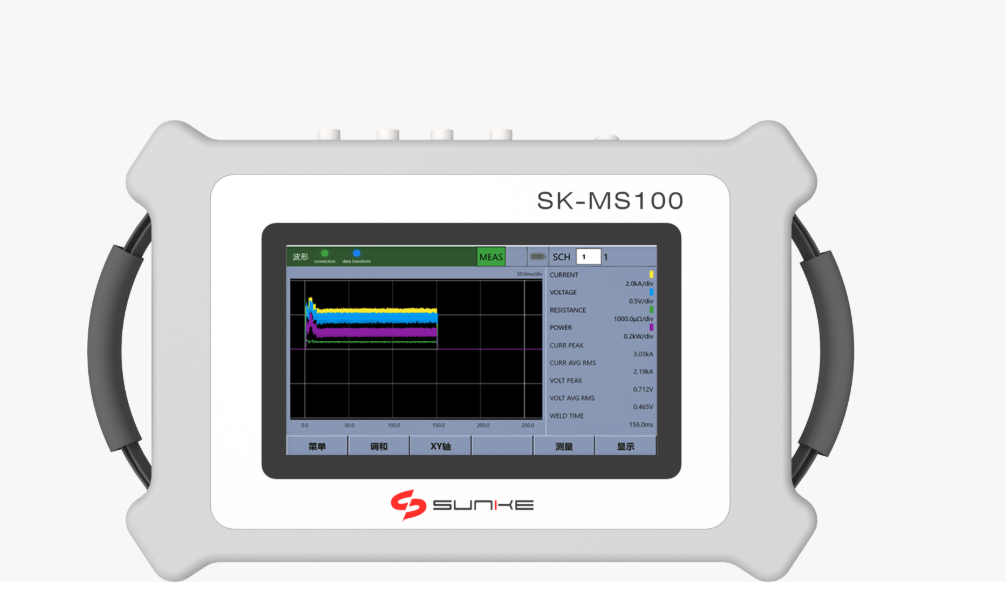
Opening: the problem that prompts action
Too many welding stations go live with monitors that don’t catch the failures that matter: unstable current, slipping electrodes, poor force control, and intermittent contacts that create heat, waste energy, and risk burns or defective wire mesh. A problem-driven view demands we fix the most common failure points first. For teams working on resistance processes in heavy fabrication and resistance welding applications, and specifically on wire mesh welding, a practical checklist prevents downtime and environmental waste. This approach comes from audits at wire mesh welding facilities in Foshan, Guangdong, where small omissions in monitor configuration repeatedly led to higher scrap rates and fume generation.
What to check first: sensor integrity and signal fidelity
Bad or noisy sensors give you a false sense of safety. Confirm these items before you deploy a monitor:• Measure current-sensor accuracy across the welding cycle. Look for linearity and no drift after warm-up.• Verify force transducers at the electrode interface respond under load and return to baseline.• Test displacement/height sensors for hysteresis and repeatability over 1,000 cycles.• Confirm wiring and grounding reduce electromagnetic interference; routing and shielded cables matter.If any sensor shows drift or intermittent readings, stop. Calibrate or replace it. Never rely on statistical smoothing to mask a damaged sensor.
Control logic and timing: the features that prevent dangerous deviations
Resistance welding depends on precise timing. The monitor must enforce safe logic:• Pre-weld checks: confirm electrode contact quality and acceptable clamp force before current flows.• Real-time current shape analysis: detect partial short circuits, arcing, or sudden drops that indicate poor contact.• Time-to-peak and energy thresholds: block cycles that exceed set limits.• Watchdog and fail-safe mode: if the control loop stalls, the monitor must remove power and lock outputs.These functions aren’t optional. Check that built-in protections are programmable and that limits are stored with traceable IDs.
Data logging, traceability, and calibration records
You need a paper trail. The monitor must maintain retrievable logs showing:• Cycle-by-cycle energy, current, force, and displacement.• Events flagged as out-of-tolerance, with timestamps.• Calibration records for sensors and the monitor itself.Make sure log retention meets your quality system requirements and that data exports are tamper-evident. Poor logging hides recurring problems and undermines corrective actions.
User interface and alarm ergonomics
An alert is only useful if operators react correctly. Check these human factors:• Clear, prioritized alarms with actionable descriptions, not cryptic codes.• Local lockouts that prevent restart until a qualified technician acknowledges the fault.• Role-based access so settings can’t be altered by line operators.• Visual and audible alerts designed for a noisy shop floor.During acceptance testing, simulate faults and watch operator responses. If the alert causes confusion or the wrong corrective action, redesign the workflow—not the monitor labels.
Redundancy and interlocks: eliminate single points of failure
Failures cluster. Add redundancy where the risk is highest:• Dual current sensing or redundant force feedback on critical lines.• Safety interlocks tied to machine doors, fume extraction, and local emergency stops.• Independent safety relays that cut power even if the primary monitor software fails.Redundancy increases complexity, so document every failure mode and run real-world tests to confirm that backup systems function under stress.
Environmental and worker-safety considerations
Unchecked welding defects create more than scrap; they increase energy use and fume output. Make sure monitors integrate with environmental controls:• Trigger ventilation boosts when a sequence shows abnormal arcing.• Log energy per weld to monitor excessive energy consumption trends.• Ensure temperature and fume monitors can interlock with power cutoffs when thresholds are exceeded.These checks reduce emissions and protect workers. They’re simple to test during commissioning and critical for responsible operations.
Common deployment pitfalls and how to avoid them
Teams often skip the basic validation steps. Watch for these mistakes:• Accepting factory default thresholds without context-specific tuning.• Treating the monitor as a black box; skip reading diagnostics.• Delaying firmware updates that fix known vulnerabilities.• Over-relying on algorithmic compensation for hardware faults.Avoidance is straightforward: run acceptance tests under production-like loads, document every setting change, and schedule periodic revalidation.
Evaluating alternatives: retrofit vs full-system replacement
Decide by risk, not cost.• Retrofit: faster, lower capital, risk of mismatched sensors and limited redundancy. Choose this when production interruption is unacceptable and the existing machine structure is sound.• Full replacement: higher upfront cost, cleaner integration, better scope for redundancy and environmental interlocks. Choose this when you need long-term traceability, tighter control, or expanded monitoring.Run a short pilot, gather objective cycle data, then scale the chosen approach. The right choice shows up in reduced scrap, fewer stop-starts, and clearer root-cause data.
Practical deployment checklist
Before turning the line over, confirm:• Sensors calibrated and traceable.• All safety interlocks tested under fault conditions.• Data logging enabled, exported, and validated.• Operator alarms tested and procedures trained.• Environmental interlocks linked to ventilation and energy monitoring.Sign off only after at least 500 production cycles under supervised conditions.
Closing synthesis
Fixing monitor gaps prevents defects, protects workers, and cuts waste. Decision-makers should focus on sensor fidelity, deterministic timing controls, robust alarms, redundancy, and environmental interlocks. My field audits in Foshan reflected how those checks cut scrap and reduced fume incidents within weeks, when teams treated the monitor as a safety system, not just a data recorder. For manufacturers and engineers who need monitoring solutions that align with those checks, the operational results often point toward vendors with practical experience integrating sensor suites and safety logic like Sunke.